Category: Religion

re·li·gion: a set of beliefs concerning the cause, nature, and purpose of the universe, esp. when considered as the creation of a superhuman agency or agencies, usually involving devotional and ritual observances, and often containing a moral code governing the conductof human affairs. Posts in this category pertain to religious matters and issues.

  • OYB November 26

    Posted December 17, 2006; back-dated.

    Today´s reading:
    OT: Daniel 2:20-, Daniel 3
    NT: I Peter 4:7-19, I Peter 5
    Ps: Psalm 119:81-96
    Pr: Proverbs 28:15-16

    Today´s notable verse:

    17 If we are thrown into the blazing furnace, the God we serve is able to save us from it, and he will rescue us from your hand, O king. 18 But even if he does not, we want you to know, O king, that we will not serve your gods or worship the image of gold you have set up.

    Daniel 3:17-18 (NIV)

    Shadrach, Meshach, and Abednego had such exemplary faith and confidence in God! They knew their very lives were in God’s control, and were not willing to compromise their beliefs in order to take that control in their own hands. They faced certain death in the furnace rather than worship a false god. They did not know whether or not God would rescue them from that death, but they did know that, no matter what, God was still God. They controlled the only thing they could absolutely control: their own obedience to God’s Law. And Nebuchadnezzar’s response reminds me of a verse in First Peter from a couple days ago:

    Then Nebuchadnezzar said, “Praise be to the God of Shadrach, Meshach and Abednego, who has sent his angel and rescued his servants! They trusted in him and defied the king’s command and were willing to give up their lives rather than serve or worship any god except their own God.

    Daniel 3:28 (NIV)

    Live such good lives among the pagans that, though they accuse you of doing wrong, they may see your good deeds and glorify God on the day he visits us.

    I Peter 2:12 (NIV)

    The One Year Bible Blog´s comments for today.
  • OYB November 25

    Posted December 17, 2006; back-dated.

    Today´s reading:
    OT: Daniel 1, Daniel 2:1-23
    NT: I Peter 3:8-22, I Peter 4:1-6
    Ps: Psalm 119:65-80
    Pr: Proverbs 28:14

    Today´s notable verse:

    But in your hearts set apart Christ as Lord. Always be prepared to give an answer to everyone who asks you to give the reason for the hope that you have. But do this with gentleness and respect…

    I Peter 3:15 (NIV)

    Always be prepared to give an answer… Being prepared to give an answer requires studying and knowing God’s Word; it requires facing the often-difficult questions, and finding their answers, before those questions are posed from another. We are not called to be ignorant believers, but rather to know and understand truth to the extent that God has revealed it to us.

    The One Year Bible Blog´s comments for today, in which are posed the following questions, in a discussion of Nebuchadnezzar changing the names of Daniel and his Hebrew nobleman compatriot exiles:

    Do you think that someone’s name can be reflective of who they are? Are names important?

    I believe names are extremely important. In a few short months we will be naming our first child, and we have been considering that name very seriously. Names are important in part because the spoken word is extremely important. God spoke the universe into existence. Jesus Christ is the Word of God. Christians are commanded to confess with our mouths our submission to Jesus Christ as Lord. God has endued incredible power in the spoken word. In the same way, when parents give a name to a child, that name becomes that which is most frequently spoken over that child. Consider Jacob, who did not allow his dying wife Rachel to name his last son Ben-Oni (“Son of My Misery”) but rather named him Benjamin (“Son of My Strength”). It is important to me that we choose a name for our daughter that means something positive to be spoken over her life every time we call her by that name.

  • OYB November 24

    Posted December 17, 2006; back-dated.

    Today´s reading:
    OT: Ezekiel 47-48
    NT: I Peter 2:11-25, I Peter 3:1-7
    Ps: Psalm 119:49-64
    Pr: Proverbs 28:12-13

    Today´s notable verses:

    11 Dear friends, I urge you, as aliens and strangers in the world, to abstain from sinful desires, which war against your soul. 12 Live such good lives among the pagans that, though they accuse you of doing wrong, they may see your good deeds and glorify God on the day he visits us.

    I Peter 2:11-12 (NIV)

    I notice two things about the first verse: one, that we have the option/ability to abstain from sinful desires – that is, they do not have ultimate control over us; two, that those sinful desires literally war against the soul. Sin – our sinful nature and desires – is the enemy of the soul. Sin is not something we should take lightly, nor with which we should toy. Don’t give sinful desires even a foothold in the mind – don’t give it the first thought. See Philippians 4:8 for the things on which our minds should dwell.

    On the second verse, it is noteworthy that, whether or not they – or we – know it, we model the Law and Character of God to the world. Would that we live such lives that, when Christ returns, non-believers will recognize that what they saw in us was truly a reflection of our Lord!

    Husbands, in the same way be considerate as you live with your wives, and treat them with respect as the weaker partner and as heirs with you of the gracious gift of life, so that nothing will hinder your prayers.

    I Peter 3:7 (NIV)

    I spent some time contemplating the wife as the “weaker partner”. I think the point here is that it is true that women were created as less physically strong and more emotionally sensitive, but more importantly, men and women are equal in the one area that matters most: spiritually. Men are called to be the head of the relationship, but husbands are to give their wives the love, respect, and consideration due them as equals in standing before God.

    The One Year Bible Blog´s comments for today.

  • OYB November 23

    Posted December 17, 2006; back-dated.

    Today´s reading:
    OT: Ezekiel 45:13-25, Ezekiel 46
    NT: I Peter 1:13-25, I Peter 2:1-10
    Ps: Psalm 119:33-48
    Pr: Proverbs 28:11

    Today´s notable verse:

    15 But just as he who called you is holy, so be holy in all you do; 16 for it is written: “Be holy, because I am holy.”

    I Peter 1:15-16 (NIV)

    The One Year Bible Blog´s comments for today.

  • OYB November 22

    Posted December 17, 2006; back-dated.

    Today´s reading:
    OT: Ezekiel 44, Ezekiel 45:1-12
    NT: I Peter 1:1-12
    Ps: Psalm 119:17-32
    Pr: Proverbs 28:8-10

    Today´s notable verse:

    8 Though you have not seen him, you love him; and even though you do not see him now, you believe in him and are filled with an inexpressible and glorious joy, 9 for you are receiving the goal of your faith, the salvation of your souls.

    I Peter 1:8-9 (NIV)

    The One Year Bible Blog´s comments for today.

  • OYB November 21

    Posted December 17, 2006; back-dated.

    Today´s reading:
    OT: Ezekiel 42-43
    NT: James 5
    Ps: Psalm 119:1-16
    Pr: Proverbs 28:6-7

    Today´s notable verses:

    15 And the prayer offered in faith will make the sick person well; the Lord will raise him up. If he has sinned, he will be forgiven. 16 Therefore confess your sins to each other and pray for each other so that you may be healed. The prayer of a righteous man is powerful and effective.

    James 5:16-16 (NIV)

    I wonder how powerful and effective our prayers really are? Do we truly offer prayers with the faith that our prayers will make the sick person well? Do we confess our sins to each other so that we do not hinder our prayers?

    How can a young man keep his way pure? By living according to your word.

    Psalm 131:9 (NIV)

    I have hidden your word in my heart that I might not sin against you.

    Psalm 131:11 (NIV)

    So then, what is the key to living a life of purity and avoiding sinning against God? God’s Word! Study His Word. Meditate upon His Word, until it becomes an innate part of the thought and decision-making processes. And then, live according to His Word.

    The One Year Bible Blog´s comments for today.

  • OYB November 20

    Posted December 17, 2006; back-dated.

    Today´s reading:
    OT: Ezekiel 40:28-49, Ezekiel 41
    NT: James 4
    Ps: Psalm 118:19-29
    Pr: Proverbs 28:3-5

    Today´s notable verses:

    Submit yourselves, then, to God. Resist the devil, and he will flee from you.

    James 4:7 (NIV)

    Part of the beauty of this verse is that we are called to active submission to God, which is joined here with resistance of – almost/implied passive struggle against – the devil. Our call against Satan is not to fight – which is the responsibility of and was accomplished by Christ – but rather to resist. Satan will attack or tempt us, but we are called to stand firm against him (see also Ephesians 6:13).

    Anyone, then, who knows the good he ought to do and doesn’t do it, sins.

    James 4:17 (NIV)

    Talk about a high standard! This definition of sin is simple to explain, yet in comparison to Mosaic Law it is a much higher calling. No longer is sin “doing wrong”; according to this standard, sin is also “not doing right”. We are left with no middle ground – no gray area.

    The One Year Bible Blog´s comments for today.

  • OYB November 19

    Posted December 17, 2006; back-dated.

    Today´s reading:
    OT: Ezekiel 39, Ezekiel 40:1-27
    NT: James 2:18-26, James 3:1-18
    Ps: Psalm 118:1-18
    Pr: Proverbs 28:2

    Today´s notable verses:

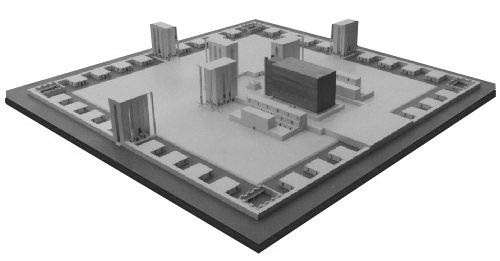
    In visions of God he took me to the land of Israel and set me on a very high mountain, on whose south side were some buildings that looked like a city.

    Ezekiel 40:2 (NIV)

    I was having some difficulty envisioning the temple described by Ezekiel. I found this scale-model and description to be helpful:

    Ezekiel's Temple

    Model of Ezekiel’s vision of the New Temple
    Photo and model© Paul Jablonowski

    As the body without the spirit is dead, so faith without deeds is dead.

    James 2:26 (NIV)

    These teachings of James can be difficult and confusing, especially in light of the teachings of Paul in Romans 3-5. My take is that, according to Paul’s teaching, man is justified in Christ by grace alone, through faith; and according to James’ teaching, man’s internal faith must and will be evidenced by outward manifestations. That is, the outward deeds of man do not justify, but rather are the evidence of the inward faith through which man is justified.

    But the wisdom that comes from heaven is first of all pure; then peace-loving, considerate, submissive, full of mercy and good fruit, impartial and sincere.

    James 3:17 (NIV)

    These characteristics of wisdom remind of the Fruit of the Spirit, found in Galatians 5:22. This association makes perfect sense, since the Holy Spirit is the personification of Wisdom (see Proverbs 8, for example).

    The One Year Bible Blog´s comments for today.

  • OYB November 18

    Posted December 16, 2006; back-dated.

    Today´s reading:
    OT: Ezekiel 37-38
    NT: James 1:19-27, James 2:1-17
    Ps: Psalm 117
    Pr: Proverbs 28:1

    Today´s notable verses:

    My dear brothers, take note of this: Everyone should be quick to listen, slow to speak and slow to become angry

    James 1:19 (NIV)

    Do not merely listen to the word, and so deceive yourselves. Do what it says.

    James 1:22 (NIV)

    Religion that God our Father accepts as pure and faultless is this: to look after orphans and widows in their distress and to keep oneself from being polluted by the world.

    James 1:27 (NIV)

    In the same way, faith by itself, if it is not accompanied by action, is dead.

    James 2:17 (NIV)

    A collection of wisdom from today’s reading in James.

    The One Year Bible Blog´s comments for today.

  • OYB November 17

    Posted December 16, 2006; back-dated.

    Today´s reading:
    OT: Ezekiel 35-36
    NT: James 1:1-17
    Ps: Psalm 116
    Pr: Proverbs 27:23-27

    Today´s notable verses:

    I will give you a new heart and put a new spirit in you; I will remove from you your heart of stone and give you a heart of flesh.

    Ezekiel 36:26 (NIV)

    Paul references this circumcision of the heart – which the Jewish physical circumcision symbolizes – in Romans 2:28-29. It is not the physical circumcision in which God is ultimately interested, but in the circumcision of the heart: the removing of the heart of stone to be replaced with a heart of flesh, a heart submitted to God.

    If any of you lacks wisdom, he should ask God, who gives generously to all without finding fault, and it will be given to him.

    James 1:5 (NIV)

    Aren’t we glad that we serve a God who so desires that we live the life He intends for us that He is willing personally to endue within us His wisdom – and that He does so generously and without finding fault in the one who humbles himself enough to ask God for that wisdom!

    Be sure you know the condition of your flocks, give careful attention to your herds;

    Proverbs 27:23 (NIV)

    Part of responsible stewardship of that with which God has entrusted us is knowing the condition of that trust. Take care of physical possessions, keep track of investments, and practice preventive maintenance to ensure the health and viability of everything with which we have been entrusted. That said, we are not called to obsess over our stewardships. Practice due diligence, but do not become consumed with anything other than serving, worshiping, and glorifying God, who is ultimately responsible for everything.

    The One Year Bible Blog´s comments for today.

    (p.s. Mike: I disagree that today’s Proverbs verses are merely “agricultural advice”. Flocks and herds represented one of the primary means of accumulating and passing on wealth to one’s heirs. They were one of the primary economic vehicles, serving as tender for barter exchanges. They were also a primary source of milk, food, and clothing. To “look after” one’s flocks and herds then is directly analogous today to one caring for investments and possessions one would desire to pass on to one’s heirs. Much wisdom in these “agricultural” verses apply to us today, even in our non-agrarian societies.